Long summer evenings in the garden
Light, warmth, good food and a comfortable seat: how to make the garden a place to stay long after sunset.
Read more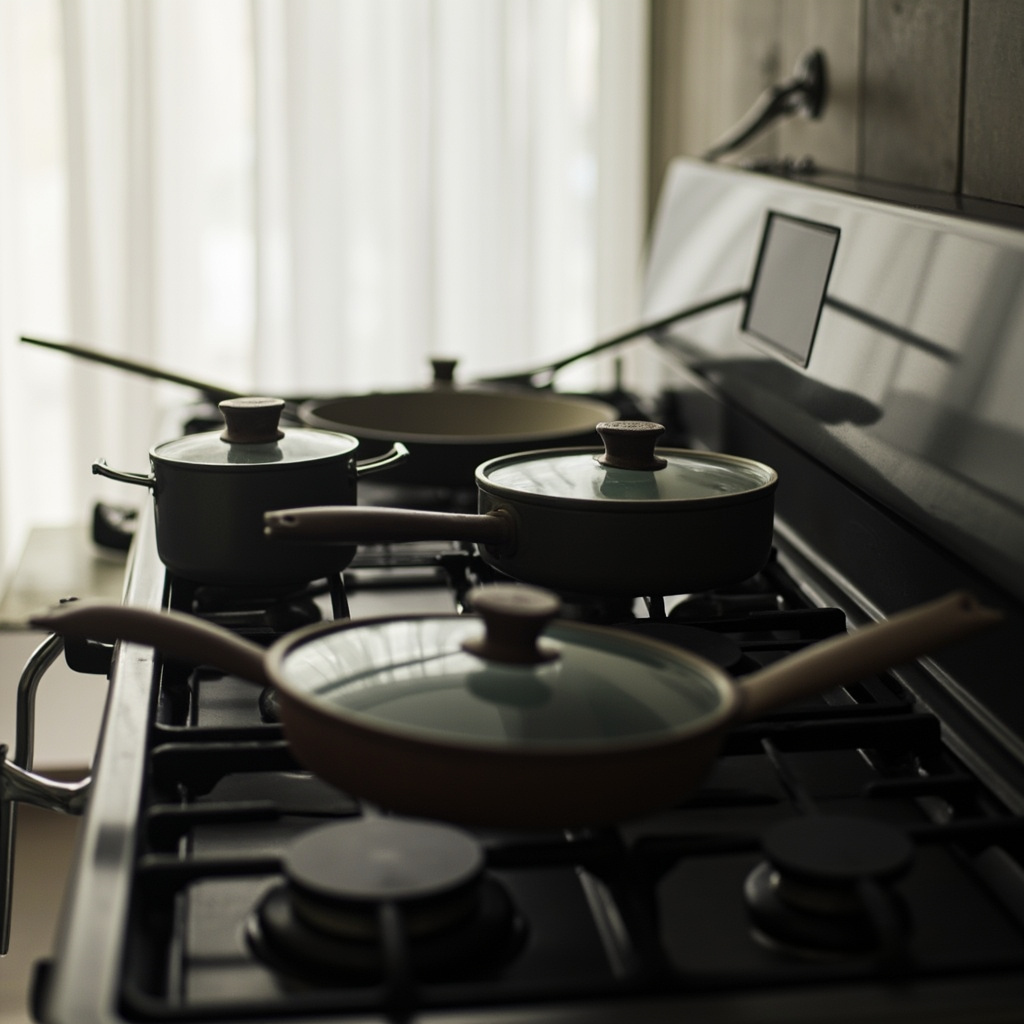
Most kitchens have a cupboard full of pans, and most cooks use the same two every day. That is a pity, because each shape does one job better than the others. Here is a short guide to four pans and what they are good at.
A pan of about 16 centimeters is the one you reach for most. It heats a cup of milk, cooks two eggs or makes a white sauce. What matters is the base. The Steenwijck saucepan 16 cm with lid has a base of three layers, with aluminum in the middle. Aluminum spreads the heat to the edge, so milk doesn’t burn along the side. The hollow handle stays cool.
Prefer a warmer look? The Steenwijck enamel saucepan 16 cm does the same job. Enamel doesn’t react with acid food, so a tomato sauce tastes the way it should.
A frying pan has low sides, so steam escapes and food browns instead of steaming. The Steenwijck frying pan 28 cm, nonstick, fits four eggs side by side, two steaks or a large pancake. Its thick base doesn’t warp on a hot burner, so the oil stays spread out. Use a wooden or silicone spatula to keep the coating smooth for years.
A saute pan has the wide base of a frying pan and the high side of a pot. Brown onions and meat, add tomatoes and stock, put on the lid, and let it simmer. The Steenwijck saute pan 28 cm with glass lid has a side of seven centimeters and holds 3.5 liters. It goes into the oven up to 180 degrees, lid and all. If you buy one extra pan this year, make it this one. Risotto, curry, a stew for four or a large pan of vegetables: it handles them all.
For a stew that simmers for two hours, a big pot of soup or rice for six, you need a casserole. The Steenwijck enamel casserole 24 cm holds 4.5 liters and goes into the oven up to 220 degrees. Two short handles make it easy to lift with oven gloves. Start on the stove, finish in the oven, and serve it at the table.
Four pans cover nearly every recipe. Start with the one you are missing, and see how much easier dinner becomes.
Light, warmth, good food and a comfortable seat: how to make the garden a place to stay long after sunset.
Read moreRain outside, energy inside. Seven ways to keep children busy and happy at home, without a screen.
Read moreA good night starts with the bedroom. How light, temperature, humidity and sound affect your sleep, and what you can…
Read more