Description
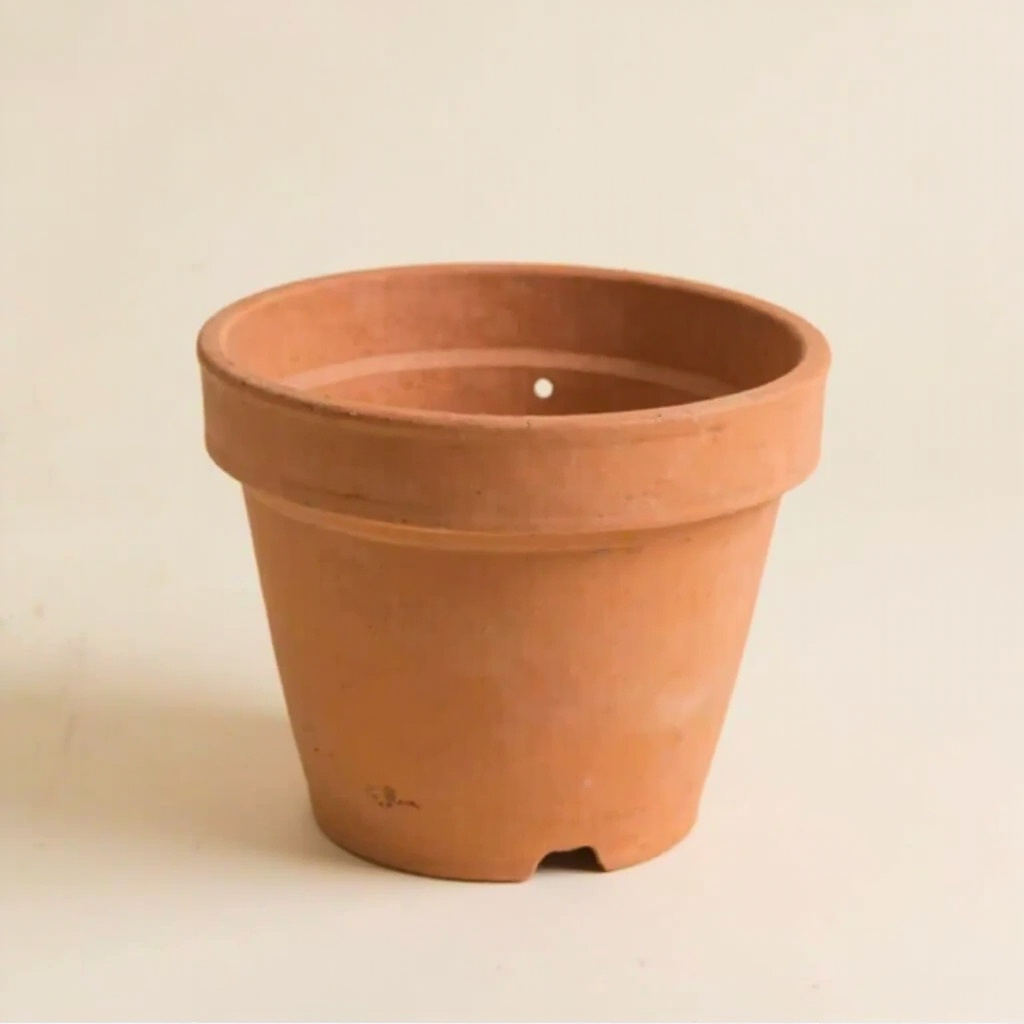
Terracotta is fired clay. It is one of the oldest materials for plant pots, and it is still one of the best.
Unglazed terracotta is porous. Water and air move slowly through the wall of the pot. Excess water evaporates through the sides, and air reaches the roots. That makes it harder for roots to rot, the most common cause of plants dying in pots.
There is a hole in the bottom. Water that the soil can’t hold runs out. Place a few pieces of broken pot or some gravel over the hole before you add soil, so the hole doesn’t clog.
The pot is fired at a high temperature, which makes it frost resistant. It can stay outside in winter. One condition: it must not stand in water. Water inside the clay expands when it freezes and can crack the pot. Lift it onto pot feet or empty the saucer before a frost.
Because terracotta breathes, the soil dries out faster than in plastic. Check plants more often in summer.
A diameter of 30 cm suits a small olive tree, a rosemary bush or a large houseplant.
For herbs, see the terracotta plant pot 20 cm.