How to store winter clothes for the summer
Clean, dry and in the right bag or box: how to store coats, sweaters and bedding so they come out…
Read the guide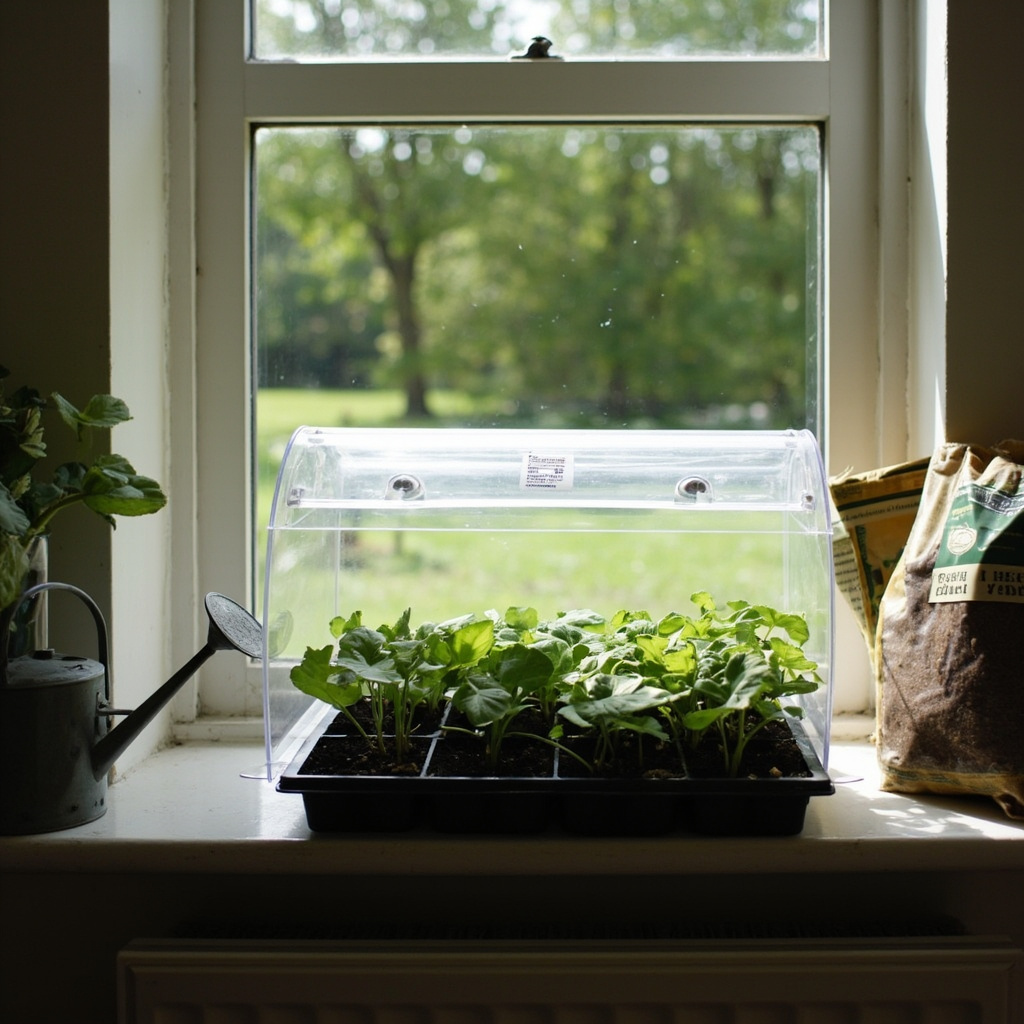
Tomatoes, peppers, many flowers and herbs need a long season. By sowing them indoors in late winter, they are strong young plants when the weather is warm enough to go outside. Here is how to do it.
The seed packet always tells you when and how deep.
Fill the cells of the seed tray with seed compost. Press it down lightly, so there are no big air pockets, and level it off.
Place the trays in a shallow tray of water for ten minutes. The compost soaks up water through the holes in the bottom. Watering from below doesn’t wash away the seeds, and the surface doesn’t form a hard crust.
Put one or two seeds in each cell. Large seeds go about one centimeter deep. Tiny seeds, like lettuce, lie on the surface with a thin layer of compost sprinkled over them. Write a label for every row. You will not remember which tomato was which.
Put the trays inside the windowsill propagator and close the dome. The warm, humid air makes seeds germinate up to two weeks earlier. Place it on a light windowsill, but out of fierce midday sun.
When drops form on the inside of the dome, open the vents a little. When the first seedlings appear, open them further. Turn the propagator a quarter turn every day, so the seedlings grow straight instead of leaning to the light.
When two seeds came up in one cell, cut the weaker one off at soil level with small scissors. Pulling it out can damage the roots of the other.
Two weeks before planting out, put the trays outside during the day in a sheltered spot, and bring them in at night. This is called hardening off.
When the nights stay above about ten degrees, plant them out. Push a pencil through the hole in the bottom of each cell, and the plant comes out in one piece. A raised garden bed, cedar wood, filled with compost and garden soil is an ideal home for them.
Clean, dry and in the right bag or box: how to store coats, sweaters and bedding so they come out…
Read the guideYou don't need a gym. With a mat, a few bands and one weight, a small corner of your home…
Read the guideA flat tire doesn't need a bike shop. How to find the hole, patch the inner tube and pump it…
Read the guide