How to set up a home workout corner
You don't need a gym. With a mat, a few bands and one weight, a small corner of your home…
Read the guide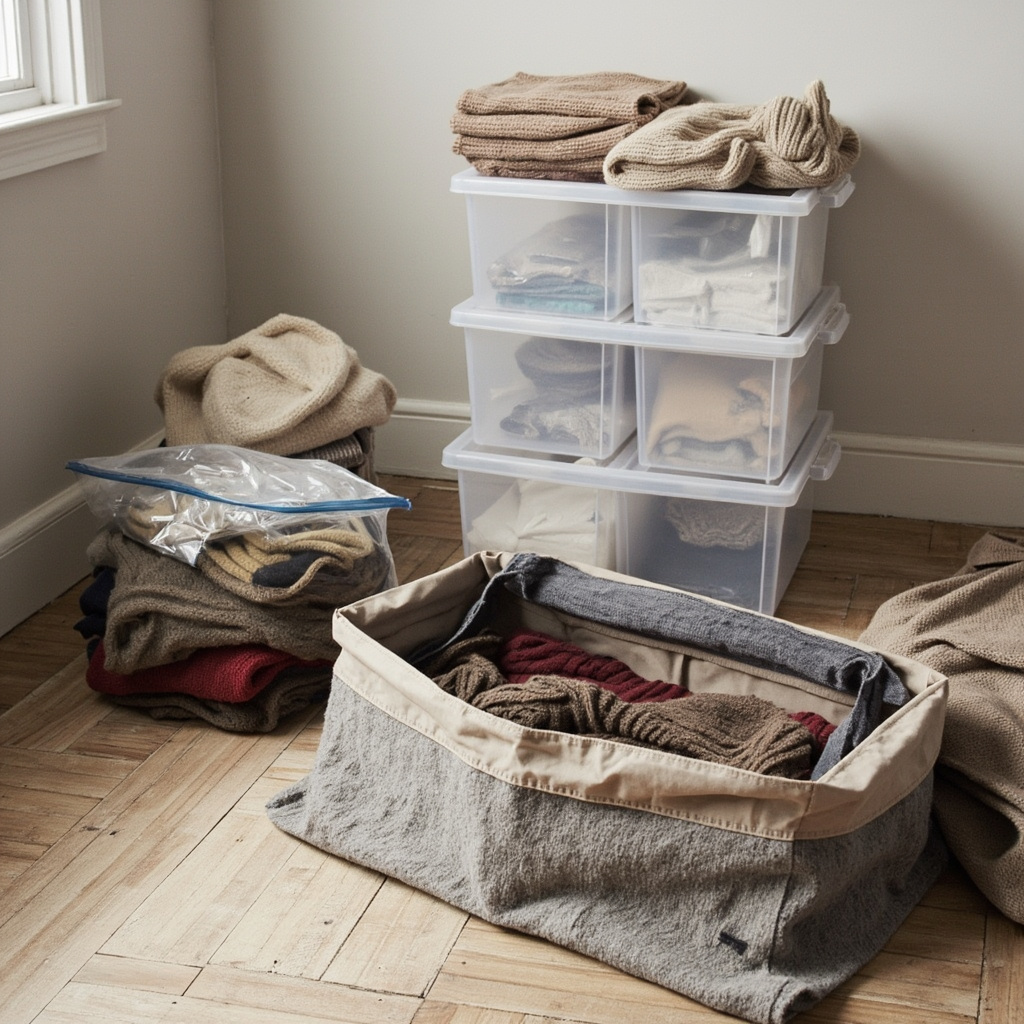
When spring comes, winter coats, thick sweaters and extra blankets take up space you need for summer clothes. Stored well, they come out in autumn fresh and ready to wear. Stored badly, they come out creased, musty or full of moth holes.
Never store clothes dirty, even if they look clean. Invisible stains of food and sweat turn yellow over the months, and they attract moths. Wash or air everything before you store it, and let it dry completely. A damp sweater in a closed bag gets moldy.
Wash wool on a wool program in cold water, and dry it flat. Wash rain jackets at thirty degrees without fabric softener.
This is the moment to be honest. Did you wear it this winter? If not, will you wear it next winter? Give away or recycle what you don’t need. Less to store means more space.
Different things need different storage.
Moths love wool, especially when it is unwashed. Put a few pieces of cedar wood or a small bag of dried lavender in each bag or box. Check your stored wool once in the middle of summer.
Heavy knitted sweaters stretch on a hanger and get bumps in the shoulders. Fold them and store them flat. Coats and jackets are better on wide wooden clothes hangers, which keep the shoulders in shape.
Write on each box or bag what is inside. In October, you will be glad you did.
Choose a dry, dark, cool place. Under the bed, on the top shelf of a wardrobe or in a dry attic works well. Avoid damp basements and sheds, and avoid direct sunlight, which fades colors.
Take everything out a few days before you need it. Shake it out and hang it in the air for a day. Creases fall out, and the stored smell disappears.
You don't need a gym. With a mat, a few bands and one weight, a small corner of your home…
Read the guideA flat tire doesn't need a bike shop. How to find the hole, patch the inner tube and pump it…
Read the guideClean, streak-free windows in a few minutes per window, with a squeegee, a microfiber cloth and a bucket of water.
Read the guide